

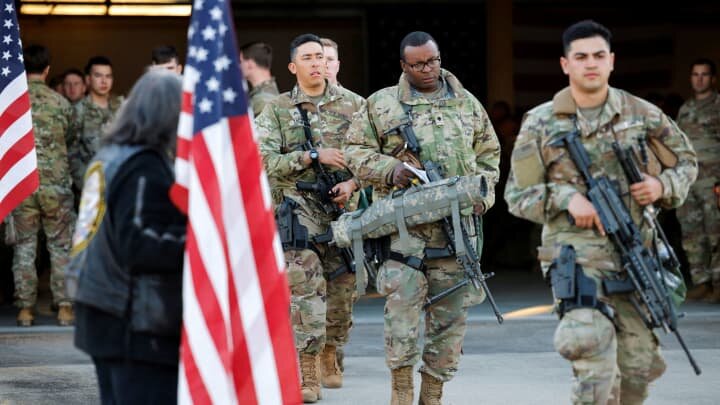
There were also disagreements between the White House and military commanders during Donald Trump's first term, but according to the Washington Post, the level of changes and tensions in the command structure during the current Trump administration is unmatched. The removal of more than 20 senior officers and the blocking of dozens of commanders' promotions have raised concerns about the stability of the US military's command structure.
This is especially significant when the US military is also engaged in a long and costly war in the Middle East. The resignation of US Army Secretary "Dan Driscoll" is the latest sign of this tension. Driscoll left his post after growing differences with US War Secretary Pete Hegseth. The differences between the two officials were not just personal or administrative, but also related in part to the way the military command is managed and to widespread changes at the top levels of the military.
The departure of a few commanders or a political official may not seem so important, but in a military structure, the stability of command is part of combat power. The army is not just a collection of planes, missiles, ships and tanks. The experience of commanders, coordination between forces and trust between the political and military structure are part of the same power that must be demonstrated during the war.
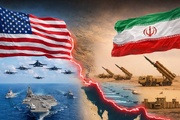
From this perspective, the Iran war has put additional pressure on the US military. Of course, we cannot yet speak of the "collapse" or "impotence" of the US military. The United States still has the most powerful military in the world in terms of technology, air and naval power, intelligence, space power, and logistical capacity. But the problem is that even the most powerful military in the world does not have unlimited resources. One of the most important limitations is weapons stocks.
The White House has put the direct cost of the war at about $37.5 billion, but that figure is only a fraction of the true cost of the war. The cost of replacing spent ammunition, repairing equipment, long-term deployment of troops, and rebuilding military capabilities is not fully reflected in this figure.
The United States has used up a significant portion of its precision munitions and interceptor systems during the war. Reports of dwindling stocks of Patriot missiles and other air defense equipment have raised concerns among military officials and US allies. The importance of this issue becomes clearer when we realize that the United States is not just stockpiling weapons for the Middle East. Washington must also have military capabilities for Europe, the Pacific, and other regions of the world. So every interceptor missile fired in the Middle East is not just spent ammunition; it is part of a stockpile that could be used in another crisis.
This is where the Iran war directly ties into America’s competition with China and Russia. If the war in the Middle East is prolonged and the US is forced to keep significant amounts of troops, aircraft, ships, ammunition, and defense systems in the region for months, the US military’s flexibility to respond to other crises will be reduced.
This concern is particularly important for America’s Asian allies. Washington’s East Asian allies are not just looking at America’s political promises; they are also looking at how many planes, ships, missiles, and munitions the United States has at its disposal in a real crisis, and how quickly it can get them to the region. So the depletion of military reserves can become a political issue.
The longer the war drags on, the more resources the US will have to devote to rebuilding its stockpiles. This means more pressure on the defense budget, increased arms orders, and years to restore some stockpiles to pre-war levels.
But the cost of war is not just equipment; manpower is also depleted. The US military structure needs experienced commanders and a stable chain of command to maintain readiness in several regions of the world. Extensive changes at the top of the military, while American forces are still engaged in military operations, can have a cost that is very difficult to measure in financial statistics. That is why the Iran war has become a strategic test for the United States.
A war that was supposed to showcase American military might has now become a debate about the limits of American power. Washington is forced to simultaneously consider the cost of war, the depletion of weapons stockpiles, the attrition of forces, the stability of command, and the ability to counter threats from China and Russia.
This does not mean that America no longer has the military power it once had. In fact, the opposite is true; America still has enormous power, but the Iran war has shown that even that power has limited costs and capacity. Military power is not just the ability to start a war; it is the ability to continue it, to replace ammunition, to maintain the readiness of forces, and at the same time to be ready for the next war.
If the United States is forced to reduce its capabilities on other fronts to win on one front, then a regional war becomes a global issue. For this reason, the true cost of the Iran war to the United States may not be apparent today but in a few years, when Washington will have to rebuild its weapons stockpiles, train new commanders, and prove to its allies that it can still manage multiple crises simultaneously.
The Iran war has perhaps questioned the concept of "unlimited American power" more than it has challenged American power in a specific operation. And for Washington, this is perhaps one of the most important strategic consequences of this war.
MNA










Your Comment